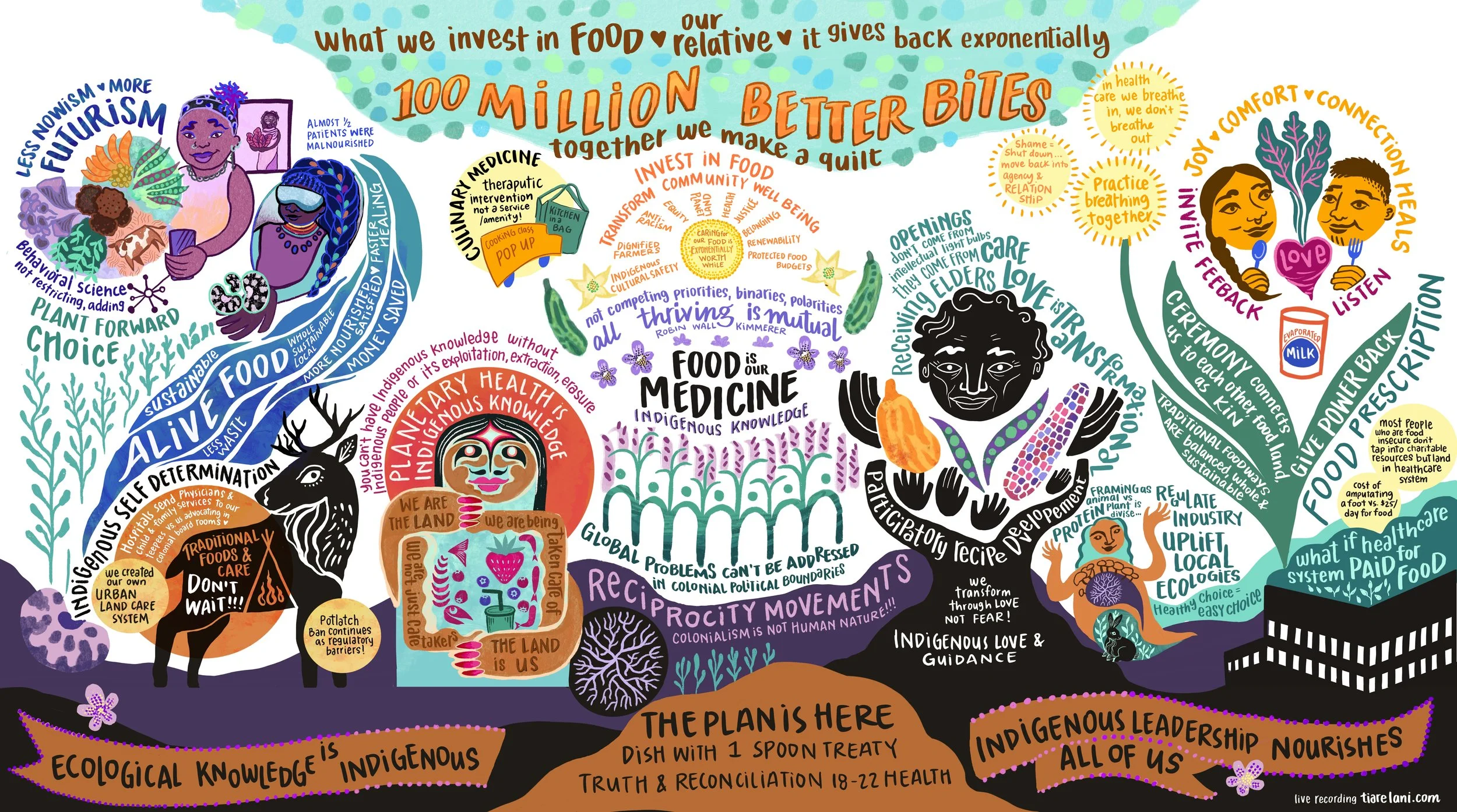
Nourish 2025

In November of 2025 we gathered online for the Nourish Symposium to gather around the role food plays in healthcare and holistic community wellbeing.
https://nourishleadership.ca/programs/symposium/

Hi, my name is Tiaré Lani (they) I’m a Two Spirit Indigiqueer artist from Lheidli First Nation (where the two rivers meet). My ancestors are also from Hawaii, Tahiti, China, and Ireland. Listening to groups gather for liberation work is one of my ancestral callings - to witness, listen, and amplify the medicine and the wisdom in the group.

I was delighted to receive the invitation to draw for Nourish because food sovereignty has been a long time calling of mine first as a student organizer and now through my artistic journey and my own body’s desire to connect deeply with land. I had just come from the 2025 Native Nutrition conference and feel the spirit of food and nourishment taking me on another journey.
https://nativenutrition.umn.edu/2025-conference

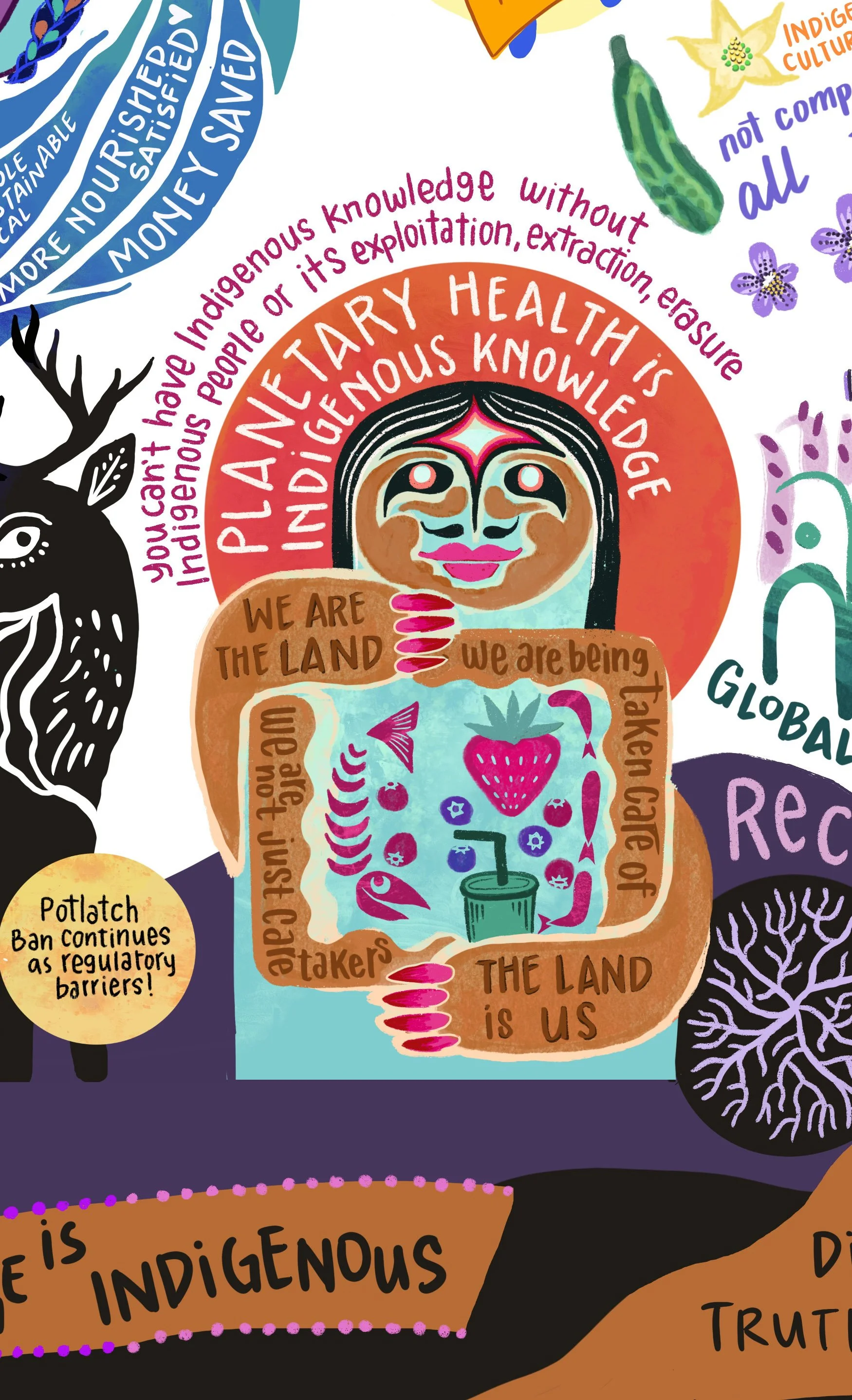
If we slow down enough to listen, our bodies want intimacy, want to remember our ways of eating that bring us into closer connection to each other and the land. Across Indigenous cultures, we celebrate that everything is alive and has spirit, and food too is our relative. When we care deeply for the land the land cares deeply for us.

As you engage with this image I’ll invite you to slow down. To feel the gravity of the surface that holds you. To notice your breathe. No need to change it. Just notice it. Notice that you have a body. Is there anything that would make your body feel 10% more comfortable? A teaching that comes from an Indigenous Elder:
Gravity is a reminder that we all belong. That we are held by the earth. That our contribution matters.

Take a few moments to take in the image, the colour, faces, flow, energy, before diving deeply into the words. Notice what looking at this image stirs in you. What emotions, stories, relationships, ideas surface. Perhaps, write them down or text them to yourself.

Reflecting on what I heard

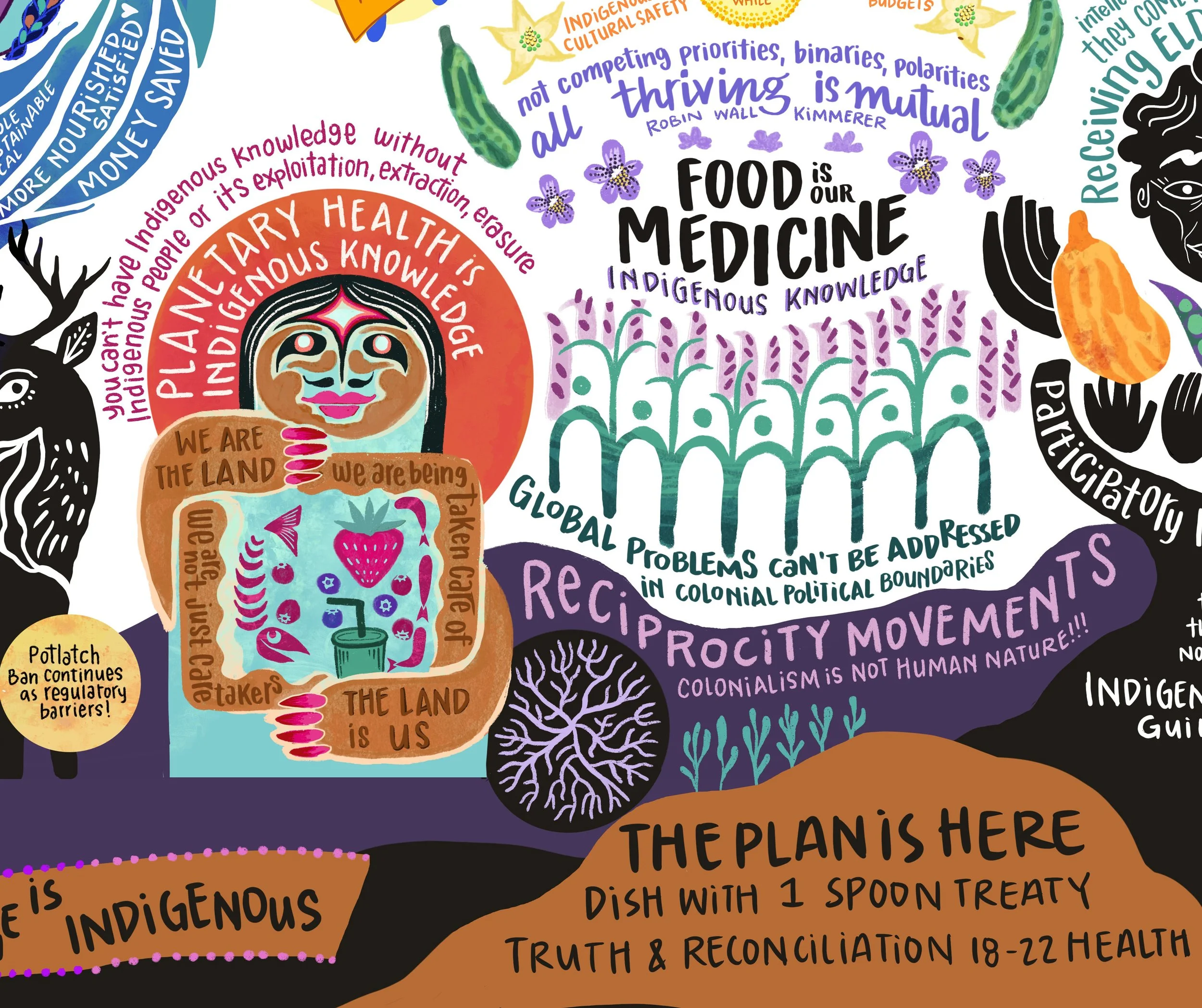
Food is a portal through which we can not only take action on climate impacts, but return to our humanity and belonging. Food is our Medicine and Planetary Health are some branches of ecological knowledge that is all rooted in Indigenous knowledge. And we cannot have Indigenous knowledge without Indigenous people. Hearing these words spoken landed like a wave of dignity in my body.

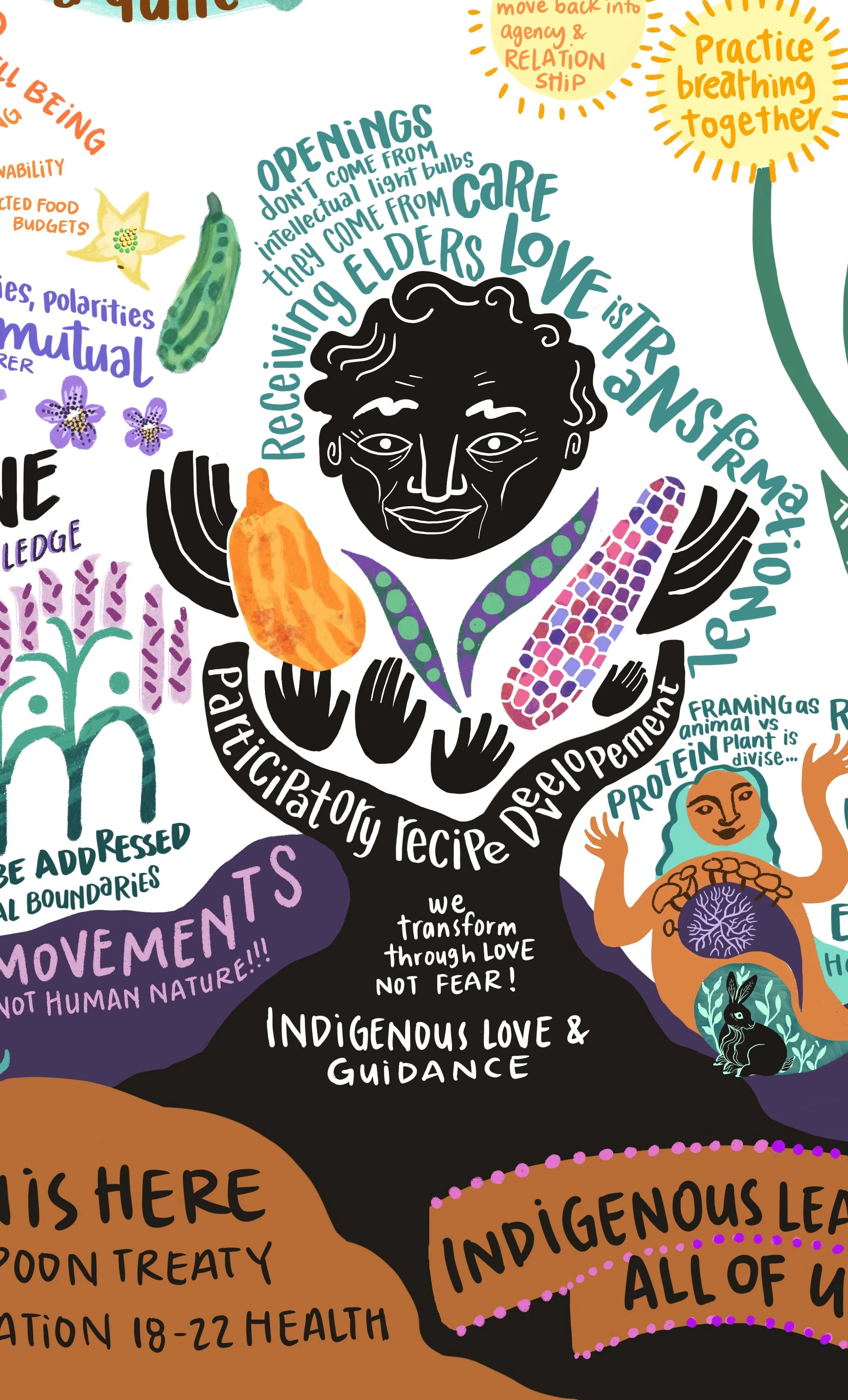
When I was a student organizer for food systems transformation, I was following out my ancestral guidance, while being under-resourced and extracted from a colonial institution. After 5 years of building a campus sustainability movement and creating a full time job that wasn’t offered to me, I burnt out. I dropped out of school to work a minimum wage job and help my low income matriarch pay for emergency dental bills. My knowledge and leadership was taken, but I was not taken care of. At the heart of restoring balance and right relationships is uplifting Indigenous leadership and paying us not only well but reparations. And so, it means a lot to me to be hired as an artist to and have my rates honoured. It means a lot to me to see Indigenous voices listened to. And I am excited to see more opportunities for Indigenous leadership to be centred - because Indigenous love and knowledge nourishes all of us.

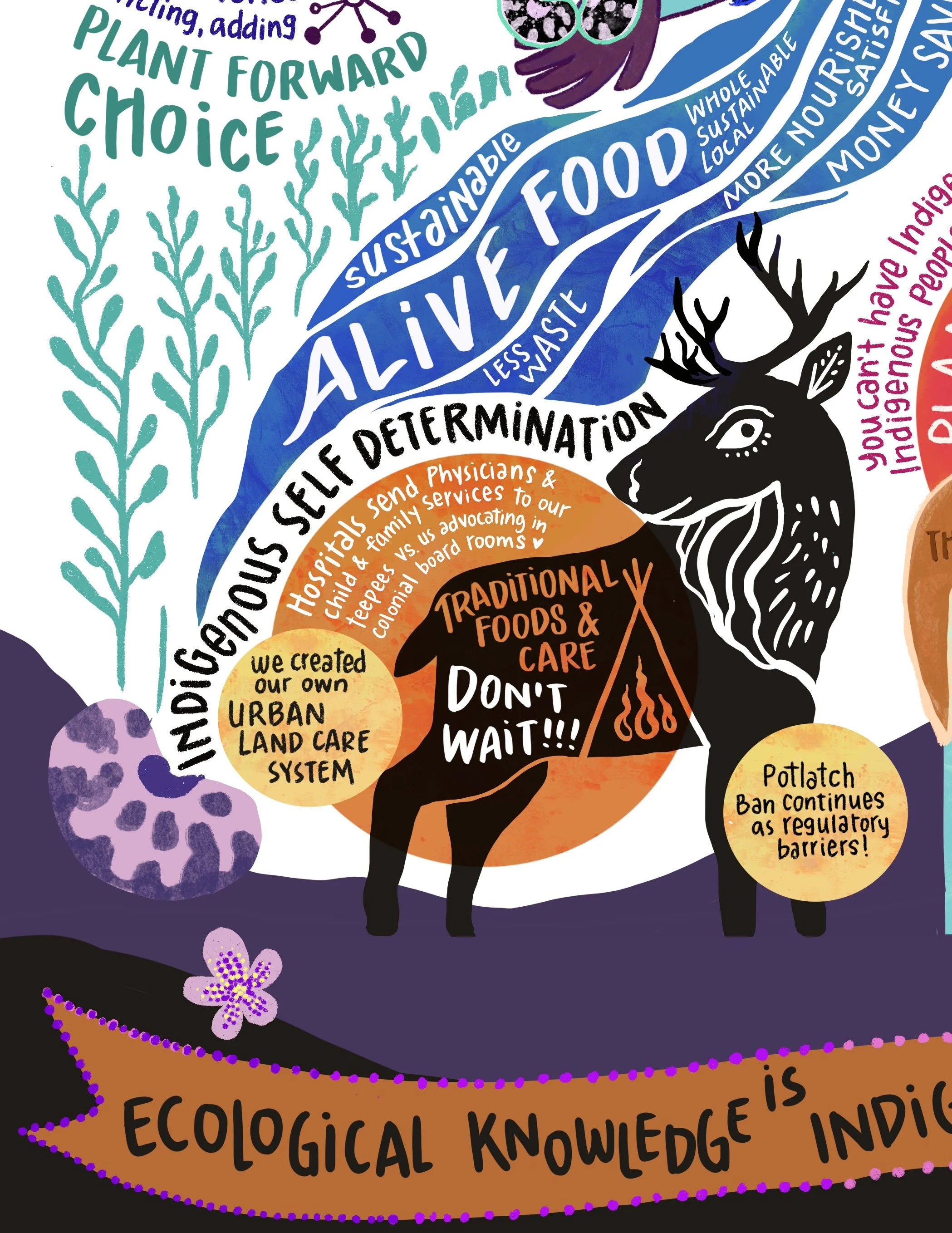
Where Indigenous people are thriving, we all have opportunities to learn and heal. Indigenous communities who didn’t wait for institutional permission and reclaimed created their own urban land care systems became a teacher for physicians and child and family services.

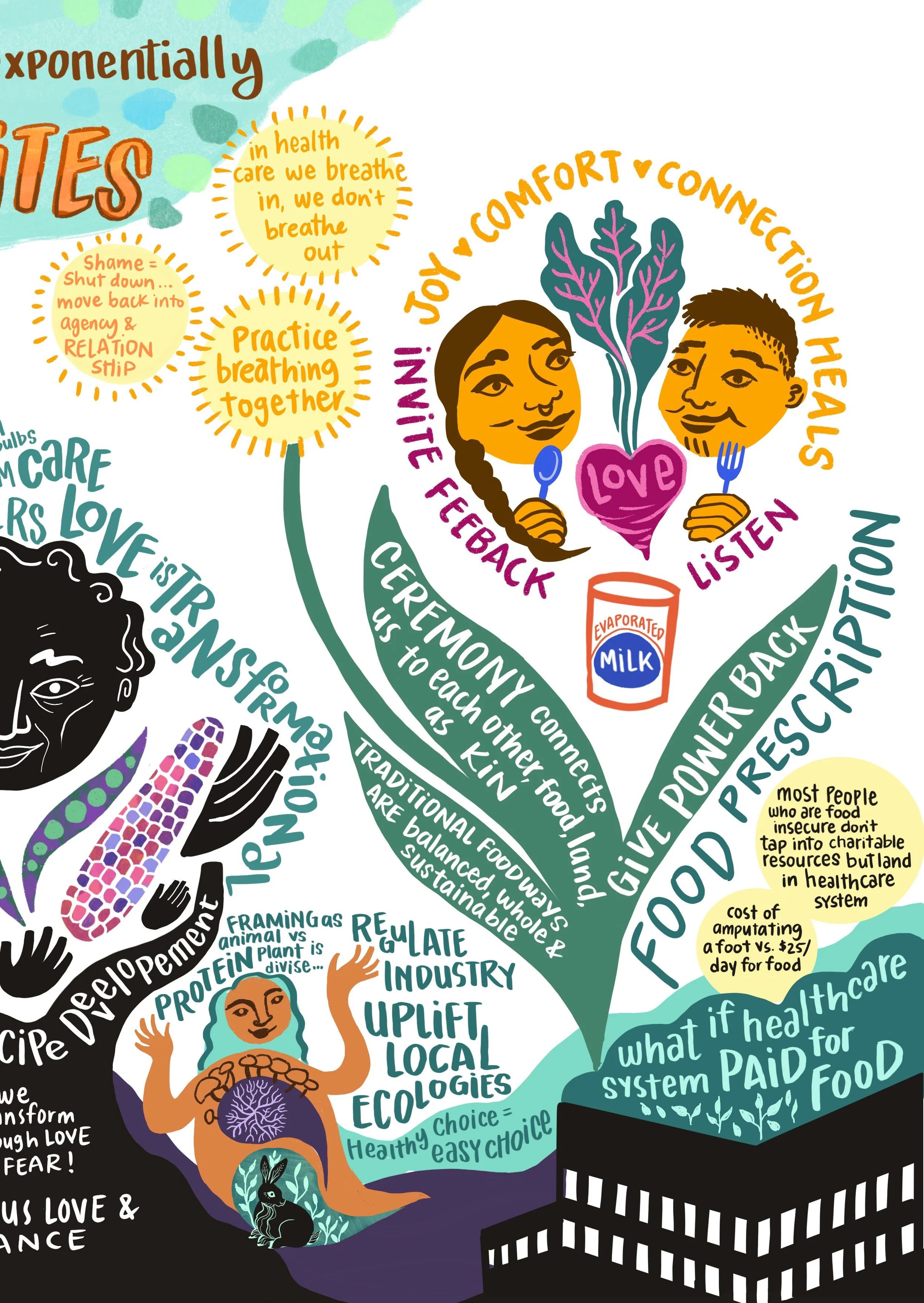
Colonial logic creates binaries, polarities, the myths of false competition. One example is the conversation about protein which compartmentalizes and creates divisive stagnation when framed as plant vs animal. A holistic, Indigenous approach centres respect for all food that gives us life, creates deeper connection to balance in a local economy, and makes the healthy choice the easy choice.

Colonial logic has a top down approach, trying to appease and fawn to top level politicians. Decolonial and Indigenous ways of knowing and being build lateral ecosystems, reciprocity movements, and relationships.

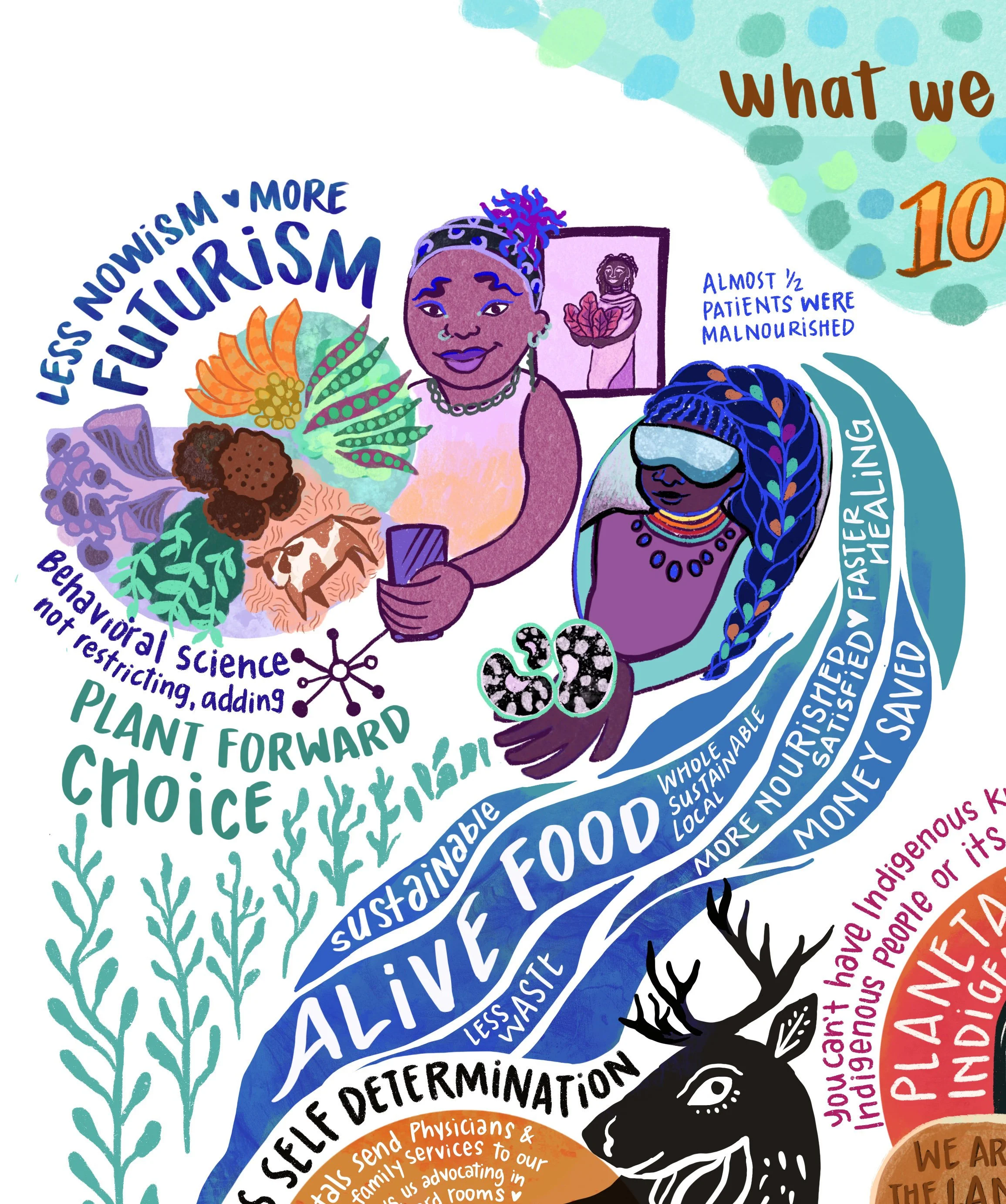
When I think of technology, I think of the 1000s of years of pre-colonial civilizations that lived in harmony with the land. I think of seed saving. I think of the “ancestral grandmothers who braided seeds and promise into their hair before being forced onto transatlantic slave ships.”
-soulfirefarm.org/braiding-seeds-fellowship/

The good news is, as Robin Wall Kimmerer writes, “all thriving is mutual.” Scarcity and competition are colonial myths designed to justify stealing and hoarding of collective wealth. When we invest in food prescriptions, participatory recipe development, food as medicine, alive (not highly processed) foods, we already have all the technology we need not only to prevent illness but to live more beautifully than we can currently imagine.


Resources/ invitations for deeper relationship

Dish with 1 Spoon Treaty

Truth & Reconciliation  - 18-22 Health

Chelsey Luger and Tosh Collins describe Indigenous food ways as, “doing things on the land, for people you love, with people you love.” in their book the The Seven Circles: Indigenous Teachings for Living Well.

The Service Berry - Robin Wall Kimmerer

Native Nutrition Mural/ visual story weaving:
tiarelani.com/native-food

Native Nutrition Conference
nativenutrition.umn.edu/2025-conference

If my work resonates with you and you want to stay connected, you can follow my creative and erotic aliveness journey here:


@iamtiarelani (instagram)

@tiarelani (substack)
tiarelani.com (blog coming soon)